
Free white paper · Soft × Incenteev
The Sales Training Playbook: AI roleplay + gamification that builds real skills
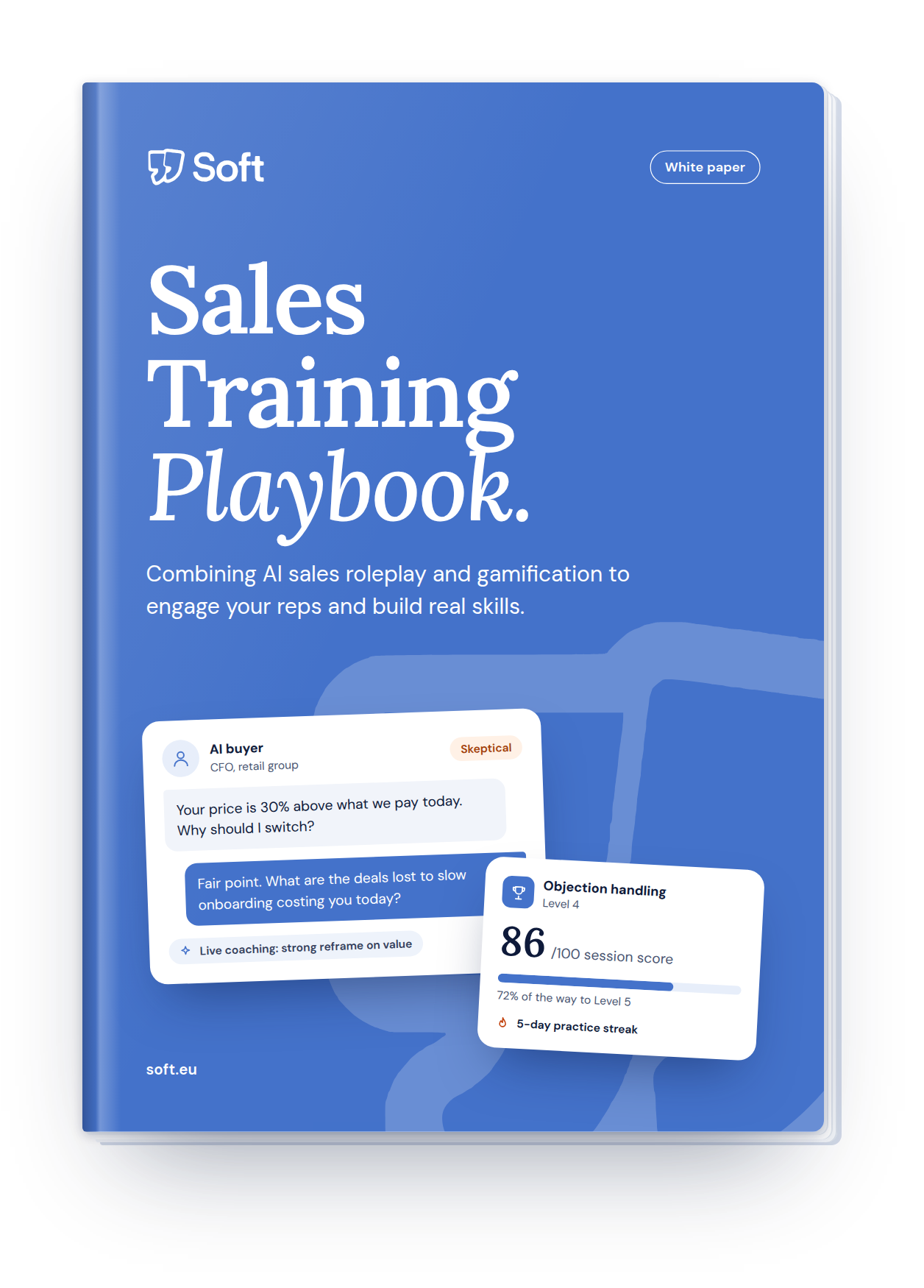
Practical use cases, coaching principles and a 90-day rollout plan to engage your reps, build their skills and bring better habits into real customer conversations.
- 5 practical use cases: Cold calling, discovery, offer launches, coaching and renewals.
- 90-day rollout: Test your scenarios, set a weekly practice routine and assess progress.
- Implementation checklist: Covering scenario design, gamification, coaching, governance and technology.
Free · PDF sent to your inbox · Data hosted in the EU
Get your free copy
From the team behind Incenteev, supporting sales organisations for 15+ years









Why this guide, why now?
Your reps complete their onboarding. Training participation looks healthy. Yet some still struggle to handle objections, uncover customer needs or defend value under pressure.
Completion rates show who took part. Understanding what reps can do in a real conversation requires a closer look.
Gamification gives teams a reason to start practising and keep returning. AI sales roleplay gives them realistic conversations where they can experiment, receive immediate feedback and try again. Managers connect that practice to the opportunities and challenges their reps face in the field.
Bringing these elements together takes thoughtful design. Challenges need to recognise meaningful progress. Scenarios need to reflect real buyers. Coaching needs to turn feedback into a clear next action.
Created by Soft and Incenteev, this white paper explains how to build that approach into your sales training programme.
What will this guide help you do?
Designed for sales leaders, sales enablement teams, L&D professionals and frontline managers, this playbook will help you:
Focus training on the conversations that matter, with clear, observable skills.
Build realistic AI practice scenarios around your buyers, objections and sales methodology.
Create a sustainable practice rhythm through challenges, team missions and recognition.
Make coaching more focused, using patterns across practice sessions to agree on one action at a time.
Assess whether learning reaches the field, connecting practice with live conversations and relevant business indicators.
Establish clear rules for training data, giving reps the trust and space they need to learn.